
Pro-life pregnancy care centers increase services as abortion numbers rise
Pregnancy care centers served more than 1 million new clients and provided more than $452 million in services and material goods in 2024 alone – recording breaking numbers – according to…
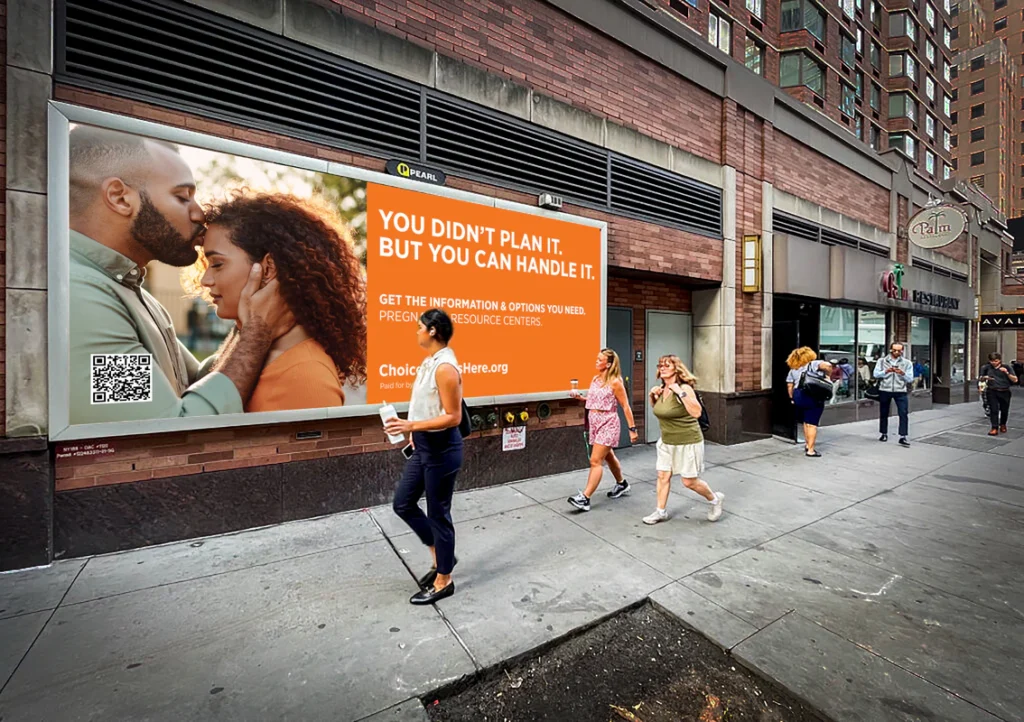
Pregnancy care centers served more than 1 million new clients and provided more than $452 million in services and material goods in 2024 alone – recording breaking numbers – according to a recent study.
The Charlotte Lozier Institute, the research branch of pro-life organization Susan B. Anthony Pro-Life America, studied the impact and growth of pregnancy care centers since 2022 when the U.S. Supreme Court overturned Roe v. Wade, the 1973 case that legalized abortion nationally.
The report covers 2,775 pregnancy center locations nationwide and nearly 3.8 million client sessions, in person and virtual. Almost every client (98%) self-reported a satisfactory or positive experience, according to the study.
Pregnancy care centers vary in resources and accommodations, but many offer free ultrasounds and free baby supplies such as diapers, clothes and baby formula. More than 9 in 10 centers offer materials to women, distributing on average six diaper packs and five baby outfits daily, Catholic News Agency reports.
“The continued upward trend in ultrasounds provided upholds their irreplaceable value in conversations surrounding choice,” Focus on the Family Director of Advocacy Peter Spriggs said in the report.
“The significance of seeing life firsthand, for both women and men, often reshapes perspectives that can change the choice … for life. Women are more able to choose the safest and most healthy path for their health and for their baby.”
Additionally, centers may offer educational classes on birth, parenting, finances or healthcare as well as free counseling sessions.
“Pregnancy centers, with the support of care workers, are going to the roots of the problem, to addiction, domestic abuse, homelessness, of the problem of just physically getting to your job so that you can do your job and support your family, the question of finishing school that you find yourself needing more resources and community and help at a moment where you want to say yes to your child and you also want to say yes to your own life and its trajectory,” Susan B. Anthony Pro-Life America President Marjorie Dannenfelser told Fox News.
Michelle, who was living with a sex-trafficker and the father of her child, said The HOPE Center in Woodstock, Georgia, helped her escape her situation and support her new baby boy.
“The HOPE Center saved my life and saved my son’s life, and if it wasn’t for them, he wouldn’t be here right now,” Michelle said in the report. “I had joy that I didn’t think was possible. That void that I had for so long, that heaviness, that emptiness, was finally full.
“I had the most amazing, beautiful little boy that anybody could ever ask for. There’s nothing more important than a human life, and there’s no amount of money that you can put on that.”
Pregnancy care centers don’t limit their services to expecting moms, but also welcome women who may be healing from an abortion physically or emotionally, as well as men either supporting the mother or grieving the loss of an unborn child, the report explains.
While pregnancy care centers are seeing an increase in clients, abortions have also spiked across the U.S., marking an 11% rise in 2023 – the year after The Supreme Court overturned Roe in Dobbs v. Jackson Women’s Health Organization. Abortions in 2024 totaled 1.1 million, which does not account for unreported abortions, Dannenfelser said.
This increase directly corresponds to the “expanded availability” of the two-drug abortion pill, which accounts for nearly two-thirds of all abortions, according to the report.
In 2021, the Biden administration removed the requirement for an in-person doctor’s visit to prescribe the abortion pill, which has allowed virtual abortion providers to ship the drugs to women across the U.S.
Despite the national rise in abortions, many states restrict or outlaw abortions. Half of the states have enacted “legal protections for unborn children,” the report states, but telemedicine health providers have violated these protections by shipping abortion pills to women who reside in states where the practice is illegal.
Lawmakers across America committed roughly $182 million in state funding for pregnancy care centers and organizations, according to the report.
More than 60% of women who have abortions, however, say they would rather have kept the child but needed more “emotional and financial support,” according to the study, Fox News reports.
Many women regret their decision after taking mifepristone – the first pill for a chemical abortion, and pregnancy centers often offer abortion pill reversal treatment, services and support.
Aagust, a nursing student who thought she couldn’t afford to raise a baby, regretted taking mifepristone and visited Mosaic – a pregnancy care center in Tallahassee, Florida.
“The moment I first saw my baby on the ultrasound, my life was complete,” she said in the report. “I was nervous about being a mom, but I knew I could do it.”
Mosaic staff gave Aagust progesterone to counter the abortion pill effects and continued to follow up with her throughout her pregnancy and after the birth of her health baby boy Carter Jay.
“He is the smartest, most active little boy ever and I love him so much,” Aagust said. “God used Mosaic to save my baby and I am forever grateful.”