SEC breaks from ‘market-rigging’ Biden-era climate rule in win for American businesses, experts say
The Securities and Exchange Commission on Friday moved to rescind a Biden-era climate disclosure rule that critics argued was the product of ideological capture and would have significantly…
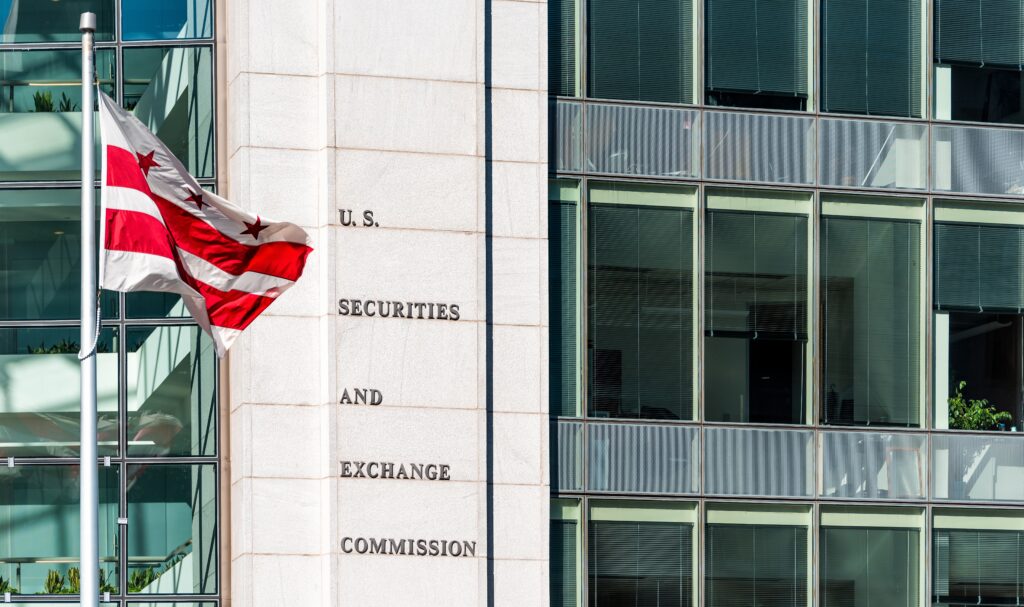
The Securities and Exchange Commission on Friday moved to rescind a Biden-era climate disclosure rule that critics argued was the product of ideological capture and would have significantly increased business costs.
The 2024 climate disclosure rule prioritized partisan politics of the Biden administration and rescinding it will be tantamount to the SEC’s most vital deregulatory action in over half a century, several economists and energy policy experts told The Lion.
The rule would have required “virtually all public companies” to disclose climate-related emissions, risks and spending, according to the SEC.
“Under the Biden administration, the SEC became the tip of the spear for a ‘government-wide’ program to channel the ‘flow of capital toward climate-aligned investments and away from high-carbon investments,'” Marlo Lewis, a senior fellow focused on energy policy at the Competitive Enterprise Institute, said in a statement.
Lewis referenced former President Joe Biden’s January 2021 executive order directing a governmentwide approach to climate policy.
“Although ostensibly an independent agency, the SEC became the vanguard of a partisan, unlawful, market-rigging agenda,” Lewis said.
CEI President Kent Lassman argued the move to rescind the rule is the “most important deregulatory step taken by the agency in more than 50 years.”
Such policies run counter to the independent federal regulatory agency’s mission to “protect investors; maintain fair, orderly and efficient markets; and facilitate capital formation.”
The disclosure rule was already on hold after several states and businesses sued the agency, arguing it exceeded the SEC’s statutory authority. Under SEC Chairman Paul Atkins, the agency is conceding the challengers were correct, although the proposed rescission will be open to public comment for 60 days.
Nominated by President Donald Trump on his first day back in office, Atkins was confirmed in April 2025, succeeding Biden-appointed SEC Chair Gary Gensler. Acting SEC Chairman Mark Uyeda directed the agency in February 2025 to stop defending the regulation in court, arguing it was “deeply flawed and could inflict significant harm on the capital markets and our economy.”
“The importance of climate-related disclosures for investors has grown as investors, companies, and the markets have recognized that climate-related risks can affect a company’s business and its current and longer-term financial performance and position in numerous ways,” the 2024 final rule states.
The SEC has five appointed commissioners, and no more than three may belong to the same political party. Two Republican appointees – Commissioners Hester Peirce and Mark Uyeda – voted against the rule’s adoption.
The rule was issued at the height of the Biden administration’s push for a green-energy transition while other independent agencies, including the Federal Reserve, also embraced climate-related initiatives, according to a Daily Caller News Foundation report.
Jessica Weinkle, an associate professor at the University of North Carolina Wilmington who researches regulatory capture and climate policy, told The Lion the rule did not originate within the SEC.
Pressure from nongovernmental organizations over several decades, partnered with a White House that enabled a regulatory climate built on contested scenarios, helped create a regulatory environment that allowed the rule to emerge, she said.
“It wasn’t something that came from within the agencies, it was something that an NGO-business coalition developed and then pushed on to them in order to create a market for climate risk,” Weinkle said.
Elements central to the SEC rule had been promoted by nongovernmental organizations for years before regulators adopted them, Weinkle said.
For example, the Task Force on Climate-related Financial Disclosures (TCFD), created by the Financial Stability Board and chaired by Michael Bloomberg, helped advance guidelines related to disclosing climate-related risks. The 2024 SEC rule extensively referenced the TCFD.
Bloomberg also helped found the Risky Business Project in 2013 – along with now-Democratic California gubernatorial candidate Tom Steyer – which was an advocacy campaign that sought to frame climate change as a business issue, Weinkle said. Critics of the Project like American Enterprise Institute Senior Fellow Roger Pielke Jr. have argued that it relied on flawed scientific modeling that nonetheless influenced a decade of climate research and policy discourse.
Nicole Huyer, a senior research associate at The Heritage Foundation’s Thomas A. Roe Institute for Economic Policy Studies, told The Lion that when companies must spend time and resources complying with regulations such as the climate disclosure rule, costs may be passed on to consumers.
“Rescinding this misguided climate disclosure rule is a major victory for American companies, investors, and economic growth,” Huyer said. “By scrapping this politically motivated regulation, businesses can save billions in compliance costs annually. Rather than be forced to navigate woke ESG [environmental, social and governance] mandates and regulatory overreach, American companies should focus their time, effort, and money on creating value for customers and driving innovation.”
Huyer added that “under President Trump, Washington is once again choosing American businesses, jobs, and prosperity over radical environmental ideology.”
Dozens of congressional Democrats defended the rule and urged Gensler in March 2023 to advance a more stringent version after reports indicated the agency was considering scaling back some of its most controversial inclusions. Led by Sens. Elizabeth Warren and Sheldon Whitehouse, the lawmakers argued the agency would be “failing its duty to protect investors” if it weakened the regulation, Politico reported.
The SEC issued the final rule in March 2024 – nearly two years after proposing the more expansive version in 2022 – while softening some requirements, including eliminating a proposed mandate that companies disclose Scope 3 emissions.
Scope 3 emissions are “greenhouse gases generated by the delivery trucks, business travel, employee commuting, and waste generated as part of company operations,” according to Yale University.
Some Republican lawmakers have welcomed the rescission proposal. Rep. Harriet Hageman, R-Wyo., argued Monday that the 2024 rule was a “disingenuous power grab by the SEC.”