State regulations hinder microschool growth as education revolution continues
As microschools surge in popularity, state regulations often pose significant obstacles, though some states are leading the way in promoting educational freedom.
Once a niche experiment,…
As microschools surge in popularity, state regulations often pose significant obstacles, though some states are leading the way in promoting educational freedom.
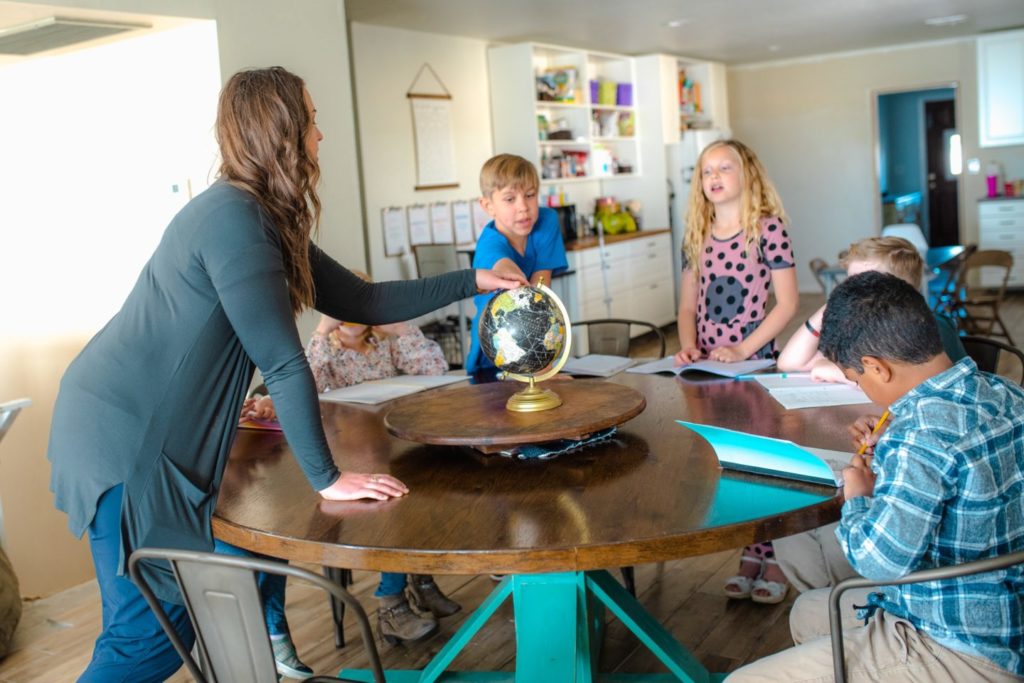
Once a niche experiment, microschools – small learning communities – gained traction during the COVID-19 pandemic as families sought alternatives to closed public schools. Others, frustrated by progressive policies, opted for smaller settings with likeminded families to reflect their values.
Many public-school teachers also have launched microschools to teach free from state testing and mandates.
Microschools now serve up to 2 million students, according to the National Microschooling Center in Las Vegas, but state regulations struggle to keep pace. School choice policies also vary, with some states supporting microschool participation.
“Microschooling is not one thing,” said Don Soifer, head of the National Microschooling Center, in an interview with The Lion. “These schools look different in every state, and the policy frameworks around them vary widely.”
No federal definition for microschools
Unlike charter or private schools, microschools lack a federal definition. Meanwhile, states classify them differently – as homeschools, private schools or unique entities. These classifications carry significant consequences for teacher certification, facilities and accountability requirements.
The National Microschooling Center reports most microschools serve fewer than 20 students, often meeting in homes, churches or commercial spaces. They are sometimes called “homeschool hybrids,” “learning pods” or “small-scale learning communities.”
Families value the flexibility, but regulators often struggle to categorize them. When treated as private schools, microschools face stringent facility and staffing mandates. As homeschools, some laws don’t fit multifamily or educator-led models.
In New York, for example, families paying a shared teacher for most instruction are considered an independent or religious school, subject to numerous regulations.
Siri Fiske, who founded Mysa Microschool in Washington, D.C., in 2016, said her school faced significant hurdles when expanding to Vermont.
“It took us forever, and we had to install ADA-compliant toilets and water fountains for just 10 kids,” Fiske told Stateline. “Most people in the U.S. starting a microschool are doing it under the radar because the regulations to open a licensed school are so intense.”
Soifer notes that even in Florida – which is a school choice leader with the most microschools nationwide – regulatory challenges persist. A 2023 law required schools to have separate bathrooms for boys and girls, which was burdensome for small microschools. The law was later modified to allow exceptions, but Soifer said some schools still face resistance from local officials over single-restroom facilities.
“For people wanting to launch microschools in rural Florida, where it’s hard to find a building with more than one bathroom for 10 kids, these issues in the hands of local officials continue to block or delay openings,” he said. “It’s hard to attract families if you can’t show them the facility.”
States pass learning pod protection acts
These challenges have prompted states such as Georgia, Texas and Louisiana to pass Learning Pod Protection Acts codifying microschools’ right to operate. Soifer praised Tennessee’s version, passed in May with strong support, as a “next-generation” model. It offers a statewide framework balancing protections with local authority.
The legislation exempts learning pods, microschools, co-ops and tutoring from excessive regulations, such as childcare licensing or staffing ratios, treating them as extensions of homeschooling rather than formal schools or daycares.
In states such as Illinois, Massachusetts and Oregon, learning pods and microschools face childcare or private school licensing requirements if they involve multiple families, hire instructors or provide compensation for childcare, according to Stateline.
As the educational ecosystem expands through empowered parents and school choice, lawmakers struggle to balance state and local control, Soifer said.
“Innovation is happening too fast,” he said. “The moment you define it in law, it becomes obsolete.”
Soifer suggests states support microschools by clarifying legal pathways, offering technical assistance and avoiding one-size-fits-all rules. He views microschools as part of a broader school choice ecosystem, not a threat to public education.
Are microschools a threat to public schools?
While teachers’ unions often resist alternatives to traditional systems, Soifer said public school leaders are showing interest in microschools.
“I get calls every week from public school superintendents who are very interested in microschooling,” he said. “They see the innovation, how families are responding, and they’re asking: How can we bring this energy into our districts?”
However, he noted unions remain a significant obstacle.
“There’s real opposition from unions to anything that shifts decision-making power toward families,” Soifer said. “They view microschools and other choice options as competition, rather than opportunities to serve kids better.”
Critics argue many microschools lack accreditation, don’t employ certified teachers and can selectively admit students based on criteria such as religion. These concerns fuel opposition to public funding for microschools, though supporters highlight their benefits.
Parents report higher satisfaction with microschools compared to public schools, and polling from EdChoice shows many U.S. parents would prefer private schools if affordable – a gap microschools and school choice aim to bridge.
Recent National Assessment of Educational Progress scores, released this month, show U.S. students performing worse than ever, suggesting regulation doesn’t guarantee results.
“That’s why so many parents are turning to microschools,” Soifer said. “They want something responsive that serves their children, not just more bureaucracy.”
New pathways to success
Fiske said her students have graduated into top colleges, proving there are “many ways to achieve academic success.”
She would like to see state “incentives to earn accreditation and information as both a school and a small business,” to help founders get off the ground.
Two major accreditors – the Western Association of Schools and Colleges, and the Middle States Association – are piloting flexible models for microschools, which could enhance their legitimacy and legal standing, Soifer said.
As public school enrollment declines and debate continues, innovation is expected to grow. Soifer emphasized microschools’ broad appeal.
“Microschools do well on the left, on the right, at the top end of the economy and at the fragile end of the income spectrum,” he said. “It’s a new economy and a new way of thinking about education.”