States could leave $23B in school choice funds unused, report warns
States that do not participate in the new federal school choice tax credit could leave nearly $23 billion in scholarships on the table, a new report finds.
Analysis by the America First…
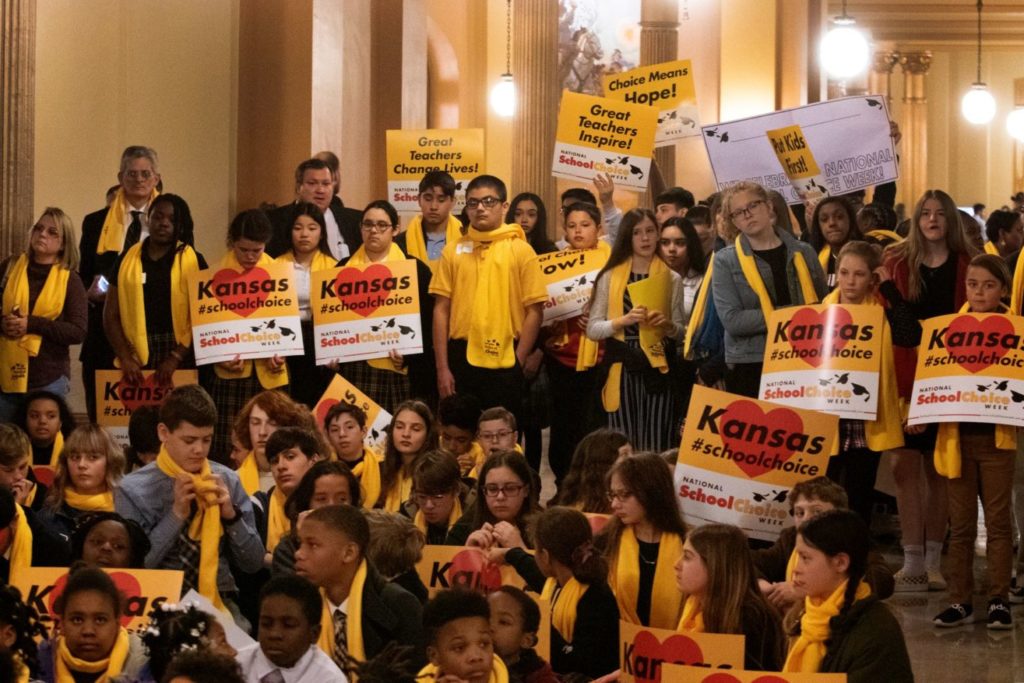
States that do not participate in the new federal school choice tax credit could leave nearly $23 billion in scholarships on the table, a new report finds.
Analysis by the America First Policy Institute found the 22 states that have not indicated participation in the Education Freedom Tax Credit could forfeit more than 4.1 million scholarships in the first three years of the program, which will start in 2027. The total also includes Washington, D.C., which has not yet opted in.
“Every governor who refuses to opt in is turning away millions in educational opportunity for their own students,” said Erika Donalds, chair of educational opportunity at AFPI and wife of Florida Rep. Byron Donalds. “This is a zero-cost, high-impact policy, yet nonparticipating states are effectively sending those resources to other states instead of supporting their own families.”
The interactive tool assumes 10% of individual taxpayers and 6% of joint filers will take the credit in the first year, rising to 14% and 10%, respectively, in year three, although those numbers can be adjusted. It estimates the average scholarship at $5,000, which can also be adjusted.
Even at the baseline, California, a state without school choice, could leave nearly $5 billion on the table.
The Education Freedom Tax Credit allows taxpayers to receive a credit for gifts of up to $1,700 made to scholarship-granting organizations, which then fund school choice scholarships. The credit, which was passed in President Donald Trump’s One Big Beautiful Bill Act last summer, will be available to all U.S. taxpayers, but scholarships can only go to students in states that join the program.
While 28 states have indicated they will opt in, allowing families, schools and scholarship organizations to prepare, several states have said they will not join. Others, mostly blue states, are still deciding, since the money can help public school students with services such as tutoring.
Teachers unions, a large voting bloc and source of donations for Democrats, typically oppose school choice, adding political pressure for blue-state governors to decline participation. To date, Colorado Gov. Jared Polis is the only Democratic governor to indicate participation, although North Carolina Gov. Josh Stein and leaders of several other states are considering it. Some are waiting for program rules to be released, which are expected this summer.
Donalds told The Lion in an email that governors are leaving “real funding and real scholarships” on the table. She added that bipartisan momentum for participation is growing as states opt to support their own students instead of letting the money go to other states.