U.S., Canada jets turn back Russians near Alaska
Russian reconnaissance jets operating in the Alaskan and Canadian Air Defense ID Zones (ADIZ) this week approached U.S. territory, according to a statement…
Russian reconnaissance jets operating in the Alaskan and Canadian Air Defense ID Zones (ADIZ) this week approached U.S. territory, according to a statement by North American Aerospace Defense Command (NORAD).
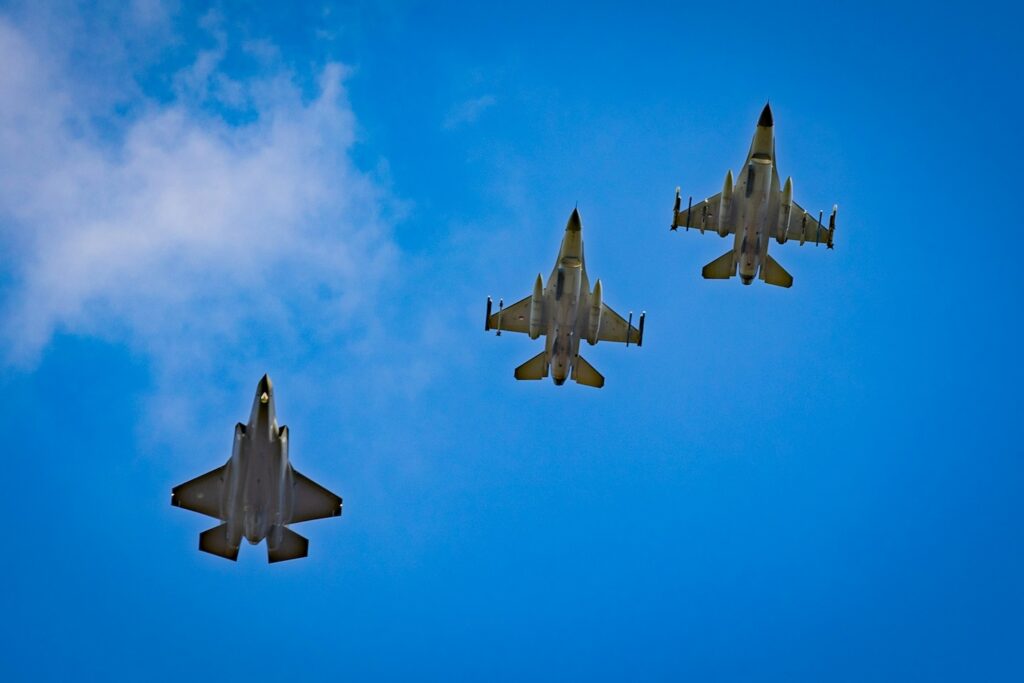
As a result, U.S. and Canadian fighter jets were scrambled to meet the Russian military flight as it loitered near U.S. airspace.
The joint response highlights the continuing role of the U.S.-Canada partnership in North American defense despite sometimes chilly rhetoric between politicians of the two nations.
“The United States is still a very important partner of Canada. That’s not changed. We need to be more resilient and less reliant. That message is very clear, and we will work with the Americans where we can, and go our own way where we have to,” Stephen Fuhr, head of Canada’s defense procurement, told a defense conference in Ottawa on Mar. 5, reported Cronkite News.
The aerial interception comes as hundreds of U.S. and allied aircraft concentrate on missions in the Middle East and Iran. It also coincides with Arctic Edge 26, a joint combined training exercise held at locations throughout Alaska and Greenland in full coordination with the Kingdom of Denmark.
While the Russians may have been testing North American air defenses as the U.S. military continues to concentrate elsewhere, the military command responsible for North American defense said the Russian planes never posed a threat.
“The Russian aircraft remained in international airspace and did not enter American or Canadian sovereign airspace,” said NORAD.
The two Russian Tupolev Tu-142 maritime patrol aircraft were detected and tracked operating inside the ADIZ on Mar. 4.
The response by the U.S. and Canada involved one of the more capable combinations of Western fighters currently in service.
Two American F-22 Raptors and two F-35 Lightning II stealth fighters were launched as a counter, alongside two Canadian CF-18 Hornets, supported by aerial refueling tankers and an E-3 airborne warning and control aircraft.
In total, roughly a dozen aircraft participated in the response, including six fighter jets and six support aircraft. The robust response suggests “NORAD wanted to send a message to the Russians,” noted one defense trade publication.
The Russian aircraft involved were long-range maritime reconnaissance platforms derived from the Cold War-era Tu-95 bomber.
The aircraft are designed for anti-submarine warfare and surveillance missions and are capable of operating for extended periods over ocean regions.
Flights of this type are closely monitored whenever they approach the ADIZ, which functions as an early-warning buffer surrounding North American territory. NORAD operates a layered defense system that uses satellites, ground and airborne radar and fighter aircraft to detect, track and respond to approaching aircraft.
“This Russian activity in the Alaskan and Canadian ADIZ occurs regularly and is not seen as a threat,” NORAD said in a statement, emphasizing that the mission was part of routine homeland defense operations.
Still, the response illustrates the growing strategic importance of the Arctic region as geopolitical competition intensifies. Russia has steadily increased long-range patrols in northern airspace, while the United States and Canada have strengthened their defensive posture in the region.
The March 4 encounter was not an isolated incident.
The latest intercept comes weeks after a similar incident on Feb. 19, when NORAD tracked five Russian military aircraft operating near the ADIZ. The formation included two Tu-95 bombers, two Su-35 fighters and an A-50 airborne early warning aircraft.
U.S. forces responded by launching two F-16s and two F-35s, backed by an E-3 surveillance aircraft and four KC-135 refueling tankers, which shadowed the Russian planes until they departed the area.
After that incident, NORAD said the Russian aircraft stayed in international airspace and posed no immediate threat.
“NORAD continues to demonstrate its ability to effectively defend Canada and the United States through real-world responses and exercises and operations that strengthen our partnership and readiness,” NORAD spokesman Capt. Chris Dubé of the Canadian Armed Forces, told Cronkite News via email.
(Image credit: Photo by Berend Verheijen on Unsplash)