
VR classical school grows as school choice expands
Classical schooling and virtual reality don’t usually go together, but one “edupreneur” has found a way to combine them.
Adam Mangana, CEO of OptimaEd, has created what he calls the…
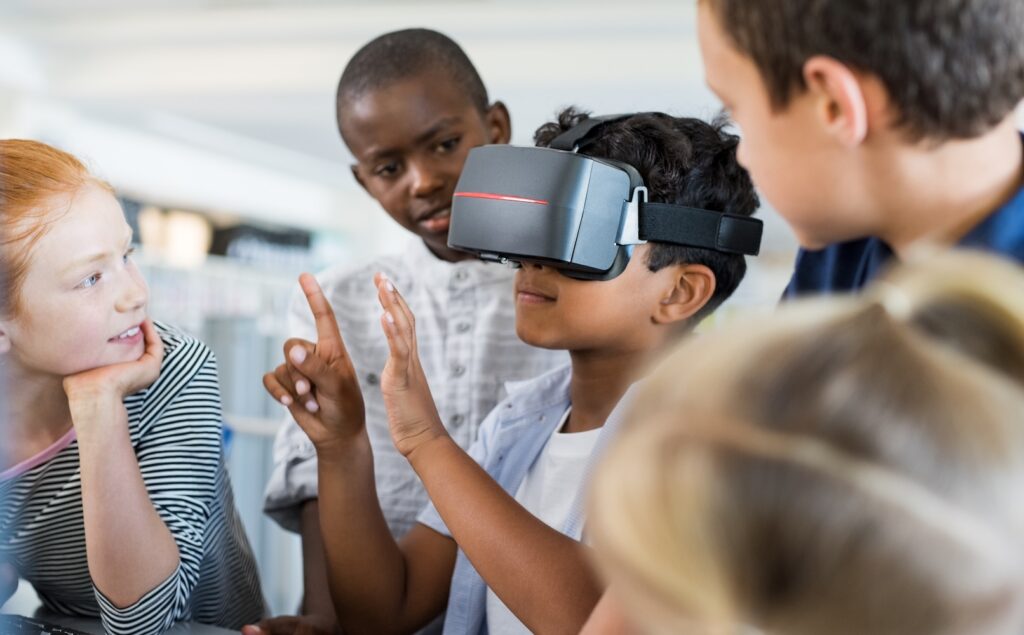
Classical schooling and virtual reality don’t usually go together, but one “edupreneur” has found a way to combine them.
Adam Mangana, CEO of OptimaEd, has created what he calls the “world’s first virtual reality school,” which teaches classical education.
“One of the great things about the tool itself is it makes learning far more efficient,” Mangana told The Lion in an interview. “We’re teaching in a very concept-based way.”
Although classical schools typically eschew technology, at least until the later grades, Mangana believes VR enhances students’ experience with classical content. The school still sends students physical copies of great books to read, but VR classes use “powerful pedagogical tools” that help concepts come alive.
“Augustine said, ‘The world is a novel. If you stay in one place, you’ve only read one chapter,’” Mangana said, quoting the Christian philosopher and theologian. “And so there’s a real advantage to being able to have a child transported into different locations in the world to teach skill and perspective and to have them understand a better sense of what it means to be a citizen.
“Another thing that Augustine said is, ‘The words printed here are concepts. You must go through the experiences.’ And so this idea of concept-based instruction, where a child can actually be present with a Founding Father and interview Benjamin Franklin, or as they’re trying to learn about valence electrons in chemistry, actually move an electron as part of an atom and see that very abstract idea in concrete form, are powerful pedagogical tools that have been present in classical education for centuries. Now we have the tool to scale them and not have the costs associated with building a physical building.”
Birthed as a pandemic alternative to Zoom
Mangana got the idea for a virtual school during the COVID-19 pandemic. As many schools turned to Zoom, he decided an immersive experience would work better than looking at “a checkerboard of faces.”
“Part of the frustration with Zoom school was the lack of accountability, cameras off, just the lack of engagement,” he said. “Where I think this really shines is student engagement. There’s a sense of accountability when you have to be present together, when you have to show up, when you have to meet face to face, even though the face-to-face experience is replicated by avatars.”
Full-time students take four courses at a time, spending a maximum of 35 minutes per course in the metaverse, or virtual reality world, where they are represented by digital avatars. Mangana said that experience helps some reserved students speak more or be more extroverted.
“They’re in the metaverse for about 2 1/2 hours, and then we can really individualize what they’re experiencing outside of those hours,” he said, noting that a school day is typically 8 a.m. to 3 p.m., including self-directed work, group work and time in the metaverse.
“The child is at home and, instead of jumping on a Zoom meeting, they’re actually present together in the metaverse with a teacher delivering direct instruction.”
Growing with school choice
After four years, his school has grown from 160 to more than 1,500 students, doubling annually. It’s available as the school of record in eight states, where it operates as a charter or ESA vendor, allowing school choice students to attend tuition-free. Students in some states can use their ESAs to pay for field trips, and students anywhere can pay for individual courses.
While Mangana wants to see “more and more” classical schools open, he sees this as a way to expand access before physical schools develop.
“There are so many families that need great content right away. They can’t wait for a school to get built,” he said. “This gets classical education into the hands of millions of kids immediately.”
The reception in classical circles has been mixed. While some are hesitant to embrace the technology or are resistant, others praise it for boosting learning and flexibility.
Elite athletes use it to fit around their training schedules, and others take classes a la carte to suit their individual needs, including homeschool students who want to grow in a particular subject.
Mangana said the top reason students leave his school, which has a 90% retention rate, is to take part in extracurricular activities such as sports.
“Many of our students are great athletes, great musicians, and they end up getting into a program that requires their physical presence,” he said.
A la carte classes include an AI tutor, which has shown promise in other school startups, such as Alpha, an AI-based school that produces exceptional results with students learning just two hours per day.
“Focus is the new IQ,” Mangana said, quoting his daughter, who made up for COVID-19 learning loss through the VR school and now reads at a ninth-grade level in sixth grade. “This takes you online in a way that can’t be replicated in Zoom school.”
Mangana praised Erika Donalds, OptimaEd’s chairman, for partnering in the technology and advocating for school choice. Donalds’ husband, Byron Donalds, is a U.S. representative, R-Florida, and candidate to be the state’s next governor.
Mangana says schools must embrace technology because “if we don’t take a more active role and we play defense, the rate of change and the rate of adoption is so great that we will find ourselves losing a generation of learners.”