North Carolina district suspends universal free breakfast; critics highlight free meal flaws
Henderson County Public Schools (HCPS) in North Carolina has discontinued its universal free breakfast program for the 2025-26 academic year, citing a projected savings of nearly…
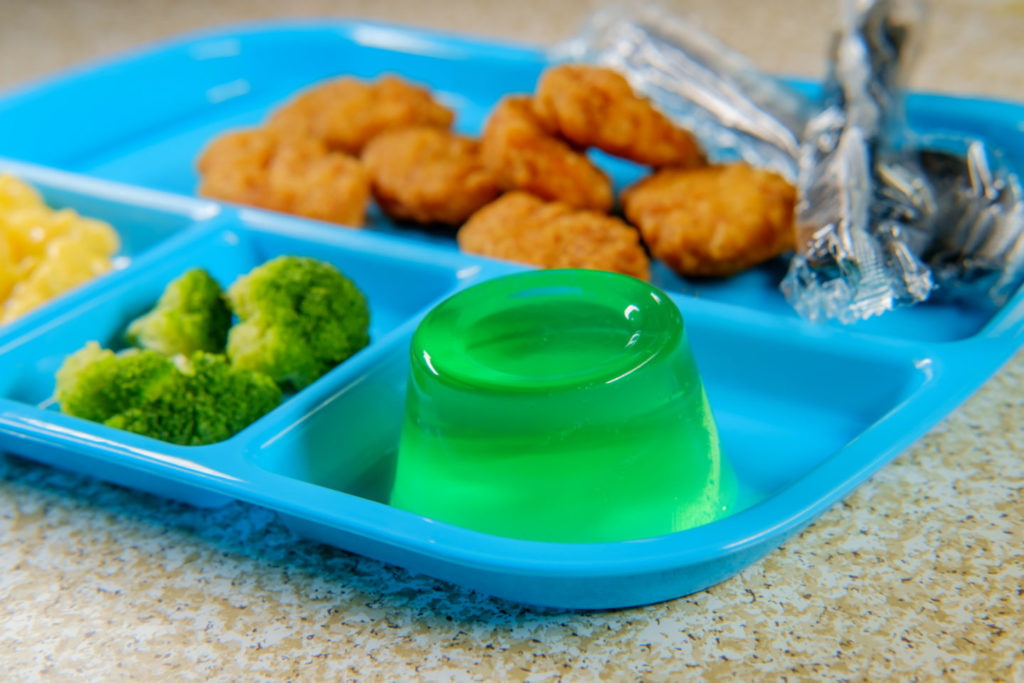
Henderson County Public Schools (HCPS) in North Carolina has discontinued its universal free breakfast program for the 2025-26 academic year, citing a projected savings of nearly $259,000.
“Federal reimbursement rates have not kept up with labor costs or food prices,” Assistant Superintendent for Human Resources Scott Rhodes said at a July 9 school board meeting, according to Gannett’s Times-News.
The district, which serves over 12,500 students across 23 schools, has suspended the program at 15 of its schools but will allow eight others “with a high number of eligible students” to continue offering the program, the article explains.
“Some students will still qualify based on need but will have to apply,” George Fabe Russell writes, noting a family of four can apply for free meals at an annual income of $59,478 or less.
‘No forms required’ for 8 schools
The district has experimented with universal breakfast programs since January 2023, showcasing it in news releases as making breakfast available “for any and all students, free of charge with no questions asked.”
Free lunches for every student came in fall 2023 but were discontinued in fall 2024, the Times-News reported.
“Breakfast will cost $1.25 per day for all students who don’t apply or qualify,” Russell notes, adding lunch will be $3.50 for elementary schools and $3.75 for middle and high schools – the same as last year.
“According to Rhodes’ presentation, HCPS is reimbursed for more than the cost of free breakfast, making 32 cents in revenue per-plate, while spending a net $2.13 on paid breakfast, 50 cents on free lunch and from 76 cents to $1.01 per plate on paid lunch.
Together, those costs are anticipated to lead to a net loss of $346,257 for the child nutrition program in the 2025-26 school year, he said.”
Of the eight schools still providing universal breakfast, all but one – Henderson County Career Academy – are elementary schools.
“Thanks to the federal Community Eligibility Provision (CEP), students at the following eight schools will automatically receive free breakfast and lunch every day – no forms required,” the district’s website explains.
“If your child attends one of these schools, they simply show up and enjoy their meals – no paperwork needed.”
Out of more than 5,600 applications for free breakfast, about 5,300 applicants have been approved, the Times-News reported – roughly 45% of the district’s student population.
Concerns over food waste, inefficiency
As previously reported by The Lion, multiple districts nationwide offer so-called “free” meals to students at taxpayers’ expense, despite growing concerns over program inefficiencies and food waste.
More than half of a school lunch’s cost goes to labor, supplies, facilities and administrative services – with only 44.7% of expenses related to food, the School Nutrition Association found.
Meanwhile, homemade lunches at a median food cost of $1.55 outperform school ones, which often cost more than $2, a 2020 study concluded.
Food waste raises additional challenges for districts nationwide.
“U.S. school food waste totals 530,000 tons per year and costs as much as $9.7 million a day to manage,” the World Wildlife Fund estimated in 2019.
“(This) breaks down to about 39.2 pounds of food waste and 19.4 gallons of milk thrown out per school per year, based on the results from the 46-school sample across nine cities.”
Lance Christensen, vice president of government affairs and education policy at the California Policy Center, highlights some of the problems stemming from such policies at the household level.
“Most families send their kids to school either with or without lunches without much discussion these days,” he said of the state’s universal school lunches – in addition to universal breakfasts for many districts.
“It’s a weird conversation every day with the kids. It’s like, ‘Are you going to eat school lunch or not?’ as opposed to spending time debating sack lunches versus lunch money.”
As a result, districts often waste resources by pre-purchasing perishable food without confirming whether it will end up eaten or thrown out, according to Christensen.
“California schools are not doing the thing they were supposed to do, which is teach kids. They now have become basically warehouses for young kids – and childcare centers for most families – incidentally teaching academics from time to time.”
Bernita Bradley, a homeschool advocate who founded the advocacy network Engaged Detroit, also takes issue with schools’ mentality of prioritizing meals over academics.
“We’ve seen that happen during the (COVID-19) pandemic where a lot of schools were saying, especially in Detroit, ‘Oh, let’s feed children, let’s get them food,’” she told the Mackinac Center for Public Policy.
“But there was no education happening, and parents were saying, ‘Look, I can feed my child. I need you to jump on a class with my child and make sure my child is actually learning.’”
Dwindling enrollment points to ‘implosion’ of public education
California is just one example of the nationwide trend of falling public-school enrollment, Christensen says.
“Our schools – for the seventh year straight – have lost upwards of 420,000 kids,” he told The Lion.
“We’re seeing the implosion of California public-school education in real time. And I don’t think the Legislature, the governor, superintendent of public instruction or any of the powers that be are really paying that much attention.”
Instead, the state has focused on a so-called community school model emphasizing welfare over academics.
“You have a narrative out there that these families are homeless and they can’t take care of basic needs and these kids need dental or eye care or basic physical exams, or whatever – most schools are going into this model,” Christensen said.
“That sounds all good on a brochure, but it’s pretty insidious because what it’s actually doing is dividing the parents and their parental duties – their rights and responsibilities – from their kids and giving it to the schools.”
For example, California’s universal school meal services come with conditions such as requesting families to reveal their household income, according to Christensen.
“My wife and I refuse to fill out forms disclosing our income because we don’t want to be part of the system that perpetuates this ‘free things, free stuff’ mentality.”