
‘Delayed childbearing’: New study reports 1.6% birth rate for women’s frozen eggs
Fewer than 2% of human eggs frozen for future artificial reproduction use result in the live birth of a child, according to new data from the American Journal of Obstetrics and…
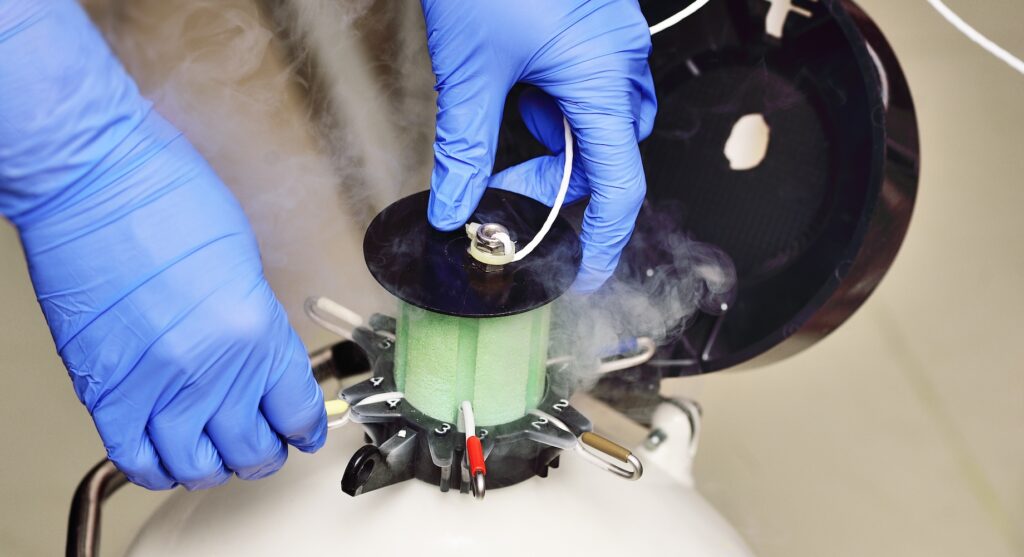
Fewer than 2% of human eggs frozen for future artificial reproduction use result in the live birth of a child, according to new data from the American Journal of Obstetrics and Gynecology.
The study also found the number of women freezing their eggs nearly quadrupled from 2014 to 2021.
Fewer than 6% of women, however, returned to use these frozen eggs within five to seven years, according to the study. The frozen eggs must be “warmed” for use in artificial reproduction – to create an embryo for implantation, often through in vitro fertilization (IVF).
Fewer than 30% of eggs warmed resulted in a live birth – excluding the eggs that remained perpetually frozen because the mothers never returned. And more than one in five women who returned for their frozen eggs left with zero embryos, due to the high failure rate.
The women who attained a successful embryo from their thawed eggs, however, did not all choose to immediately implant that embryo. Nearly 15% of these women froze all the embryos they created, while 46% opted to freeze some and implant others, and 64% implanted their created embryos.
But fewer than 30% of the women who froze embryos returned for a later transfer and implantation. Due to both the low return rate of women and the high-failure rate of artificial reproduction and implantation, only 258 live births resulted from the more than 15,000 women who originally froze their eggs – resulting in a 1.6% live birth rate.
Authors of the study say the research marks a “societal trend toward delayed childbearing” as well as an increase in “fertility awareness.”
“The low rate of live births is surprising considering that egg freezing is often touted as the solution to age-related fertility decline,” MoreBirths said in a post on X. “Fertility extension seems very limited still, and women wanting a family would be better advised to find ways to start a family earlier.”
The average age of the women who froze eggs was 35-36 years old.
“It is possible that some reproductive technology actually leads to fewer births because the false promises of this technology lead women who want children to postpone motherhood too long,” American Enterprise Institute senior contributor Tim Carney said in a post on X.
Them Before Us (TBU) – a child advocacy organization that supports the natural, biological design of one man and one woman creating and raising children together – criticized the way fertility companies target women.
“Of course, it’s not a solution to infertility. Not only that, it’s marketed to women when their fertility is at its peak, putting off their ability to have children naturally so it can be sold back to them for thousands of dollars,” TBU said in a post on X.
While the clinics profit millions for freezing eggs and selling them back to women, women suffer devastating emotional, psychological and physical loss for believing they can pause their fertile years.
“Egg freezing predators offer to harvest and store your eggs at no cost. Catch: they keep 50%. Exploitation dressed up as empowerment,’” TBU Executive Director Josh Wood said in a post on X, where he highlighted the deceptive language of companies such as Cofertility.