Jesus in the classroom: How a chaplain movement saving Bolivian street children could impact US schools (part 1)
A missionary’s method for keeping children off the dangerous streets of Bolivia began with Bible education in schools but quickly transformed into a chaplain program that has spread across Latin…
A missionary’s method for keeping children off the dangerous streets of Bolivia began with Bible education in schools but quickly transformed into a chaplain program that has spread across Latin America and now to the U.S.
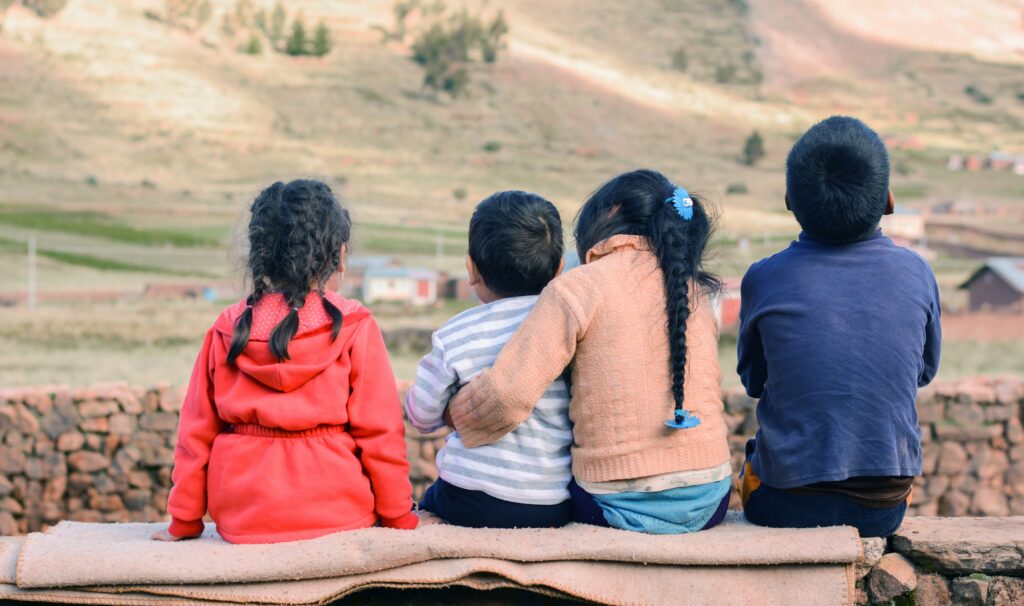
In Bolivia, roughly 1 in 5 kids – about 800,000 total – live on the streets, according to Many Hopes, an organization that rescues children from injustice. On the streets, children fall prey to abuse, addiction, crime and sexual slavery, says Rocky Malloy, founder and CEO of the National School Chaplain Association.
During his time in Latin America, Malloy discovered the best way to save kids from such tragedy was to keep them in school.
“We started focusing on prevention,” he told The Lion in an interview. “How can we help kids stay in school so they would not end up on the street in the numbers we were seeing? The only thing that ever worked for me personally was Jesus.”
The Malloys’ missionary work in Latin America
After his miraculous rescue from a life prison sentence as a pirate, Malloy met and married his wife, Joske, on the Honduran side of the Nicaraguan border in 1989. A few years later, the couple arrived in Santa Cruz, Bolivia, and planted Rio de Vida Church in October 1995. In close affiliation, Victory Bible Seminary opened in 1997 and held classes in the church’s building.
Within three years, 34 additional Bible colleges opened across the country, Malloy says, and graduates of these schools continued the church-planting mission, leading to more than 1,000 church plants throughout Latin America, North Africa and the Middle East today.
Quickly, the Malloys realized their mission field was not only the training of Christians but also the protection of kids in Bolivia — a country with one of the highest per capita rates of street children.
These kids are not necessarily orphans, Malloy explained. Instead, the children are culturally forbidden from returning home and left to the streets, where they suffer immense abuse, trafficking and organ harvesting.
Malloy met a 15-year-old girl who was paralyzed after organ harvesters stole her spinal fluid. An 8-year-old boy with a massive scar on his back told Malloy he’d “be sacrificed” for his second kidney after harvesters had taken his first.
Protect kids by keeping them in school, teaching Jesus
For Malloy, preventing these atrocities primarily relied on schools where children could first encounter Jesus. So beginning in 1999, Bible college graduates were deployed into local Bolivian schools to teach public school religion classes. Within the first year, the city of Santa Cruz had seen a major reduction in teen pregnancy, street crime, drug abuse and child trafficking.
“Everything you want to increase did, and everything you don’t want decreased,” Malloy said.
As demand for such teachers increased, the Malloys began training teachers who were already in the classroom.
“The goal was to equip educators with practical tools to teach biblically based ethics and morals effectively in the classroom,” Malloy said.
The Malloys developed seven biblical principles to integrate into the classroom: love, creation, purpose, work, productivity, leadership and family.
“We are going to teach children principles because if you teach children principles, the result will be values,” Joske said in a video on the NSCA’s website.
Opposition creates greater flourishing
But communist governments increasingly seized power across Latin America in the early 2000s, forcing the Malloys to withdraw the biblical curriculum, which had spread to numerous countries.
Despite communism’s atheistic stance, the Bolivian people fiercely defended the schools.
“When the Communist government was trying to go into school to literally take our stuff out, the community came together and stood on the school property and said, ‘No, you’re not doing that,’” Malloy said.
However, as a result of the government opposition, the Malloys strategically shifted from a curriculum-based system to a chaplain-based system. The chaplain could embody the biblical truths and love, train and protect schoolchildren, without violating the law.
The government and schools reached an agreement: The schools won’t discuss politics if the government permits the role of a chaplain. Many staff members already in the schools then trained to become chaplains through a two-year program. A separate one-year program also allowed teachers and staff to become spiritual counselors, Malloy explained.
“When the Communists came through Latin America, we were forced to withdraw all the biblical content out of the book. So that’s when we put chaplains in so they can bring Bible content back to school,” Malloy said. “And the actual chaplain program blew up. It took off way faster than the book program did.”
The programs rapidly spread throughout Latin America, reaching every Spanish-speaking country – 22 in total. In the last 13 years, these countries have seen an 85% reduction in teen pregnancy and up to a 37% increase in high school graduates, Malloy said.
“We put chaplain in school to maintain godly witness,” he said. “It’s created a movement for God, the Bible, faith and prayer, and it all comes back to school.”
This is the first part of a two-part series on how the school chaplaincy program that began in Bolivia is growing in the United States.